
Last updated November 14, 2026
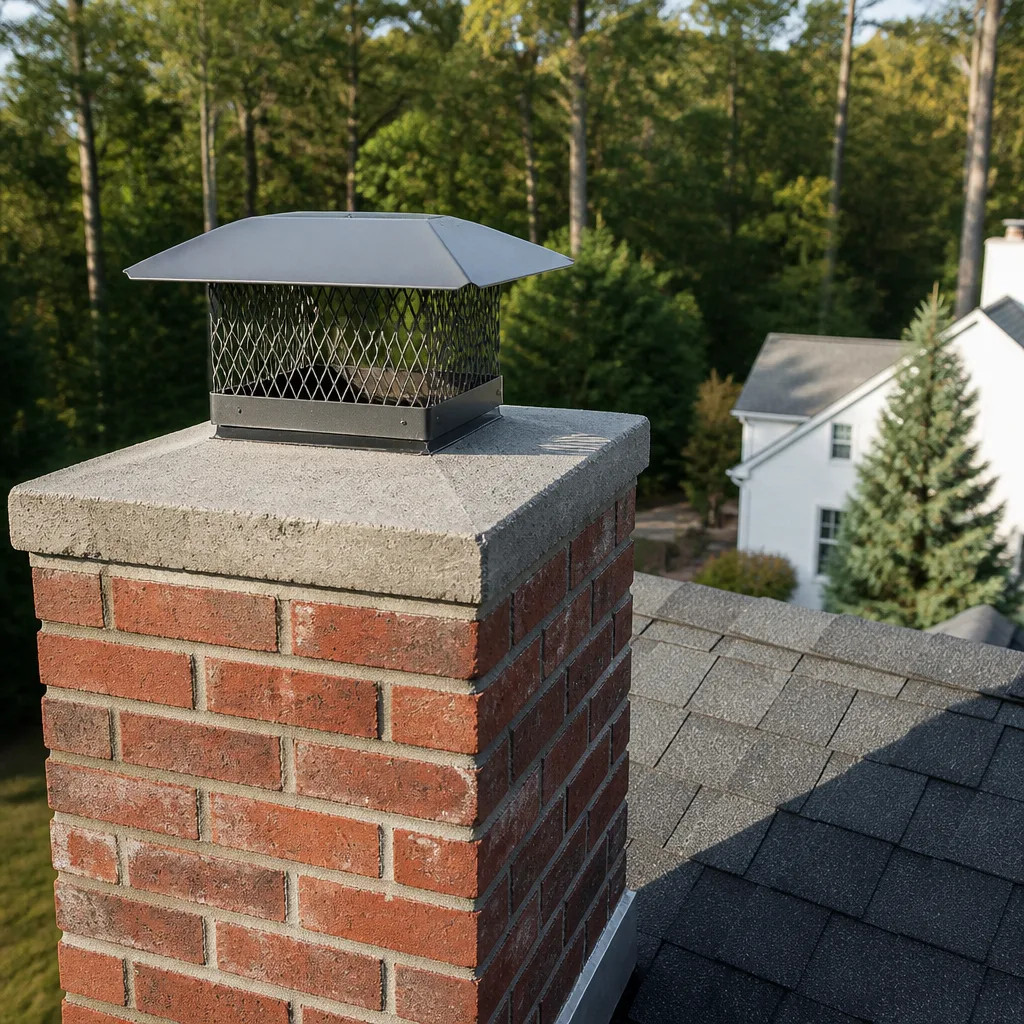 Sweep & inspection
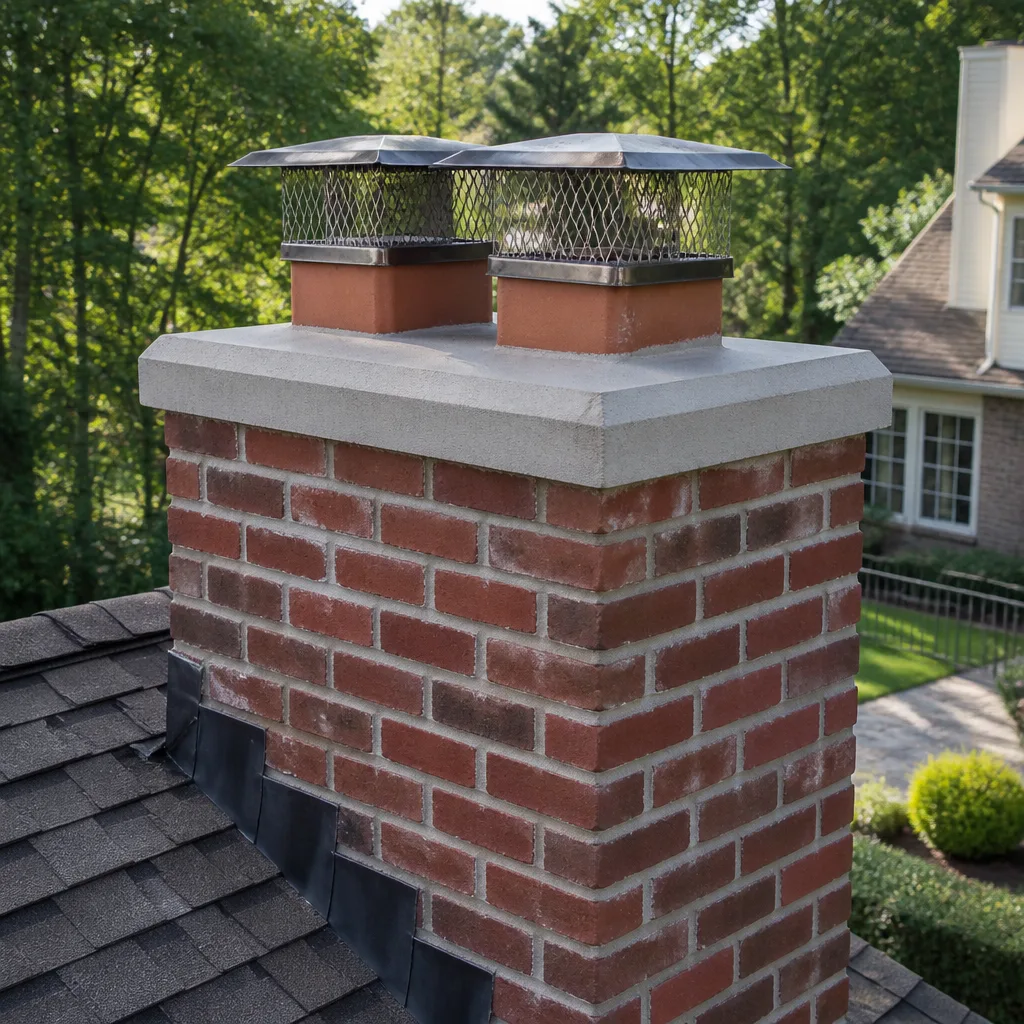 Caps & crowns
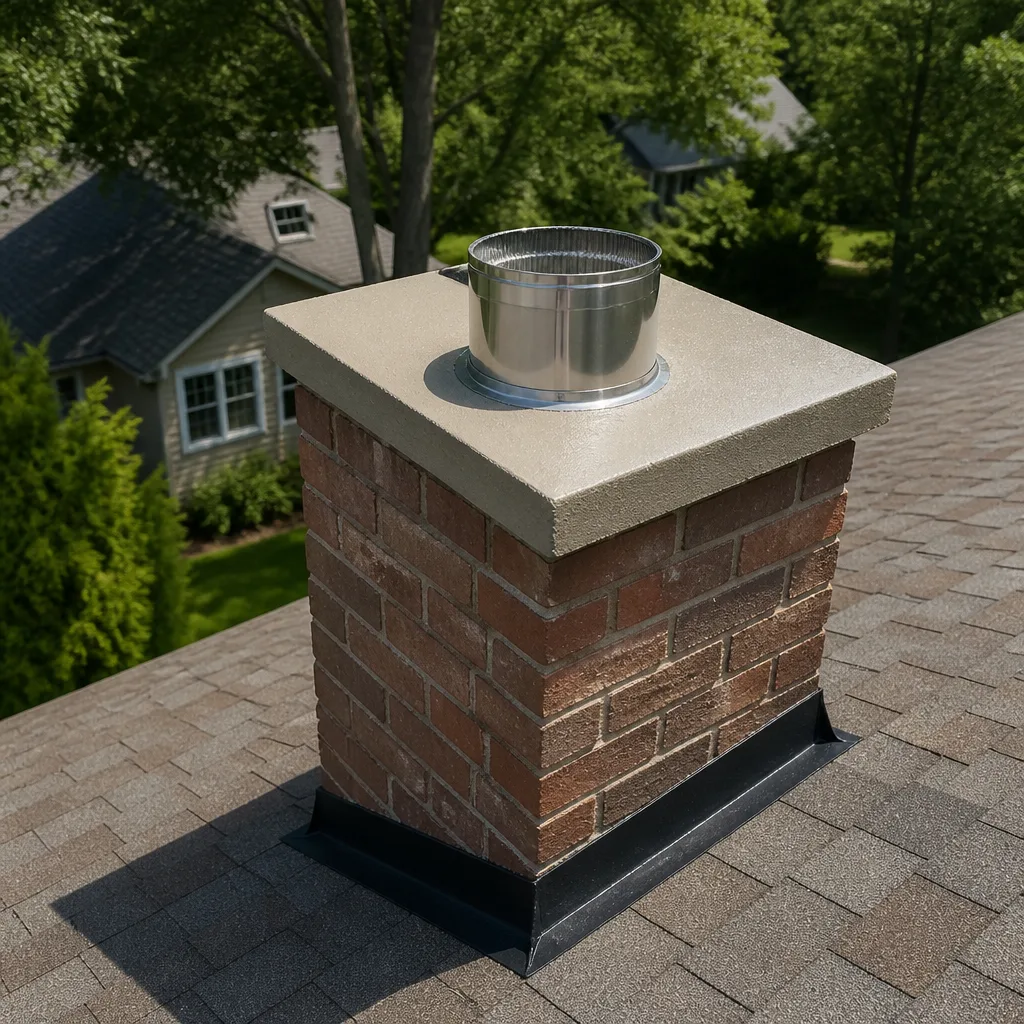 Flue relining
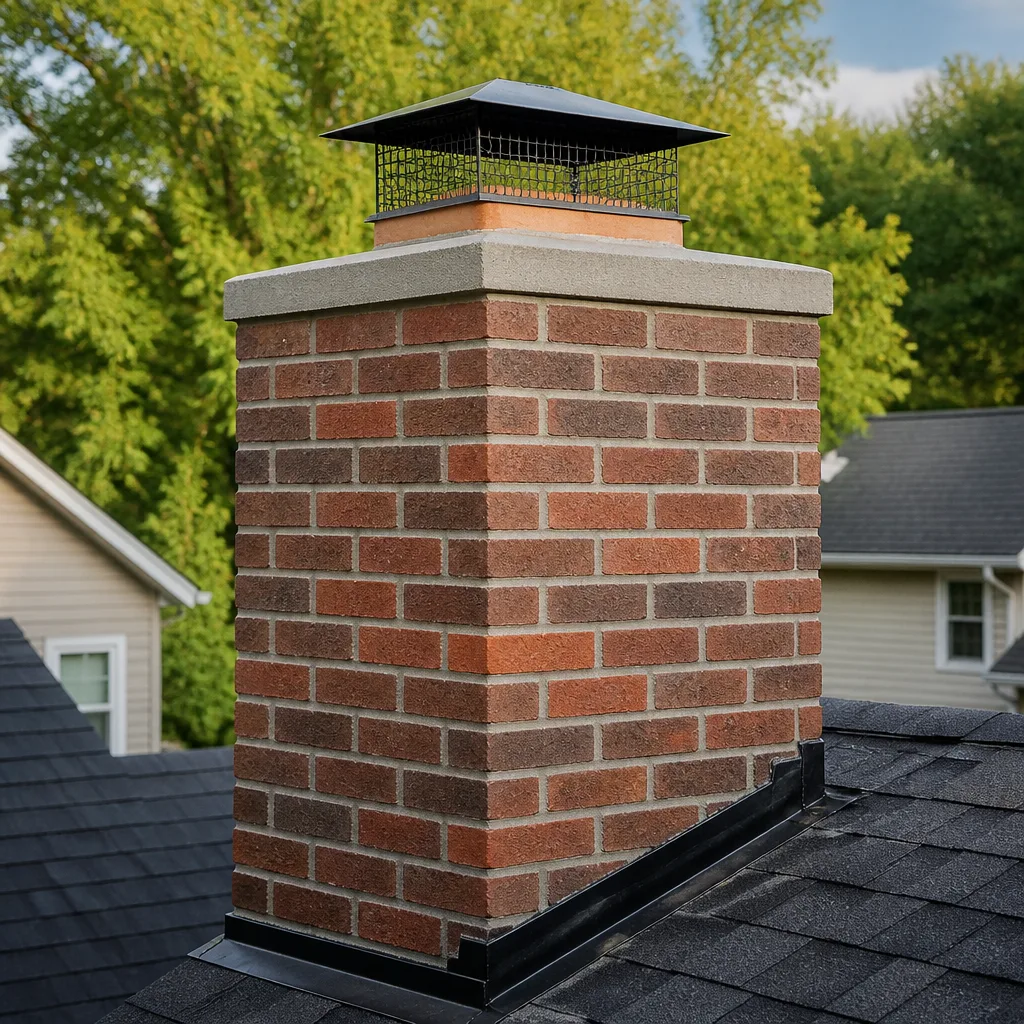 Masonry repair
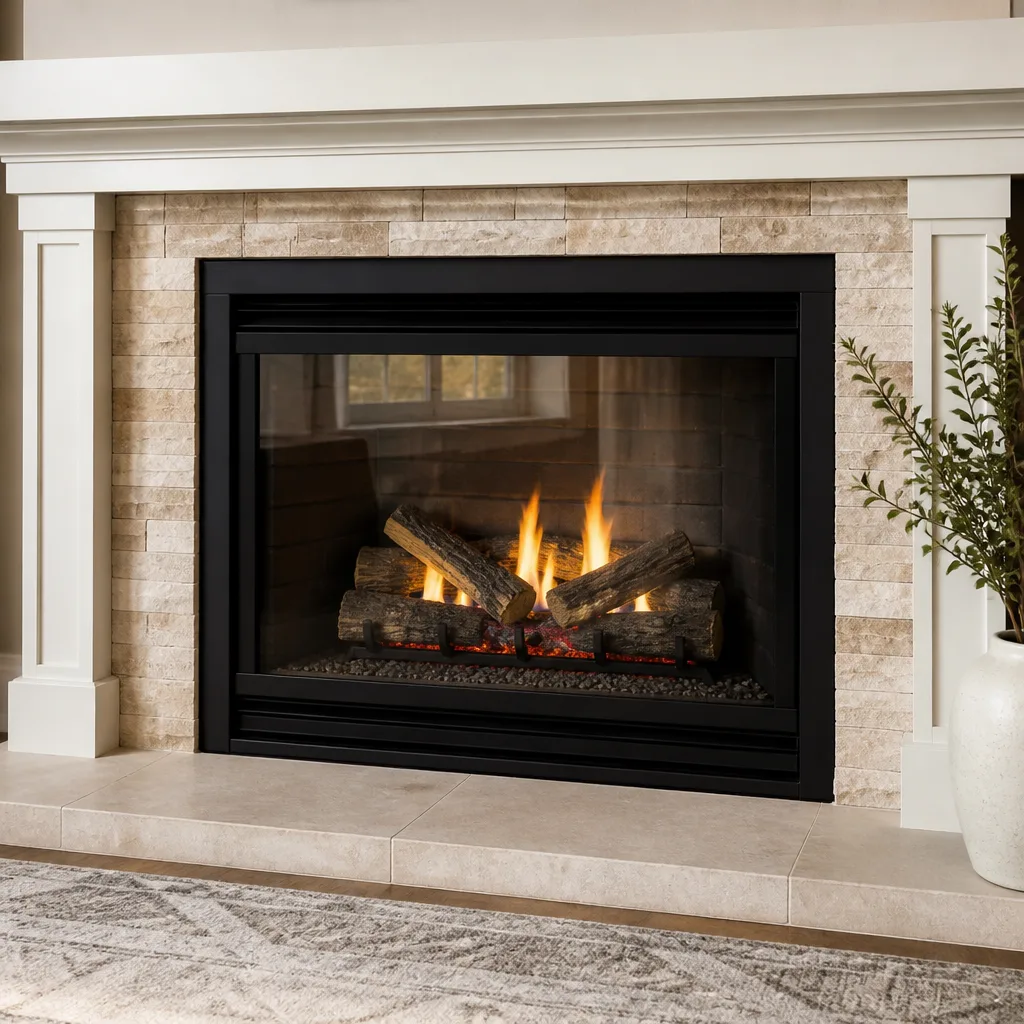 Gas fireplace service
Level 1 sweep and inspection to the NFPA 211 annual standard - flue, crown, cap, and flashing checked and photographed
Chimney sweep logs do not sweep chimneys. They loosen some creosote - which then falls where a brush and vacuum still have to collect it.
Chimney Cleaning Warning Signs: A Portland Homeowner’s Reference Guide
A white stain on your chimney’s exterior isn’t cosmetic wear. That chalky bloom is efflorescence, and it means water is moving through the masonry under pressure, pushing mineral salts to the surface as it goes. In Portland’s wet climate, efflorescence is one of the earliest signals of a liner or flashing problem, and a chimney that carries it through one more rainy season will usually cost considerably more to fix than it would have at first sight. The same is true of a fireplace that draws lazily, a firebox that’s gone dull and chalky, or a faint smell you can’t place. Each is a symptom with a specific cause, and this guide maps the visible sign to the failure behind it so you know what you’re actually looking at before you call anyone.
Styles & brands we work with
- Sweep & inspection
- Caps & crowns
- Flue relining
- Masonry repair
- Gas fireplace service
Quick Answer
Chimney warning signs fall into two broad groups: signs that mean the flue needs cleaning (heavy soot, a weak or smoky draft, a faint creosote smell) and signs that mean the chimney needs inspection before you light another fire (efflorescence, spalling brick, rust in the firebox, smoke rolling back into the room). In Portland, persistent dampness, moss growth, and shallow freeze-thaw cycles make water-related signs appear earlier and more often than the national checklists suggest. Any warning sign you can’t confidently identify should be checked by a trained chimney professional before the next burning season.
Table of Contents
- The Symptom-to-Cause Index
- Why Portland’s Climate Produces Its Own Set of Warning Signs
- Warning Signs You Can See From Inside the Home
- Signs That Mean “Clean Soon” vs. Signs That Mean “Stop and Inspect”
- Staining, Spalling, and Rust: What Water Damage Actually Looks Like
- Moss on the Crown and the Masonry Problem It Hides
- How to Describe a Warning Sign to a Technician
- Common Mistakes to Avoid
- When to Call a Professional
- Frequently Asked Questions
- The Bottom Line
The Symptom-to-Cause Index
Most homeowners read a symptom and guess at a cause. A smell gets blamed on the wood, a stain on weathering, a weak draft on a cold day. The index below connects the sign you can actually see or smell to the system failure most likely to produce it. It won’t replace an inspection, but it will tell you whether you’re looking at a cleaning issue or a structural one, and that difference changes what you do next.
- A faint, acrid creosote smell, strongest on warm, damp days: an accumulation of creosote in the flue, often compounded by negative pressure pulling odor down. This is usually a cleaning issue, not a structural one.
- A smoky, campfire smell that lingers after a fire: incomplete draft or a blocked flue. Creosote buildup or an obstruction is the likely cause, and both warrant a sweep.
- Smoke rolling back into the room when you light a fire: a draft failure, which can point to a blocked flue, a chimney that’s too short for the roofline, or a pressure problem in the house. This is inspection territory.
- White or grey staining on exterior masonry: efflorescence, meaning water is being driven through the brick or mortar and pushing salts out. It signals a water-entry path, often at the flashing or crown.
- Flaking, crumbling brick faces or mortar joints: spalling, which means the masonry has absorbed water, frozen, and cracked. Water is inside the structure, not just on it.
- Rust on the damper or firebox hardware: water is reaching parts of the chimney that should stay dry. Damper rust is a water problem, not a wear problem.
- Chalky white staining inside the firebox: often a sign the firebox masonry is breaking down, which points to a repair rather than a cleaning.
- A visible shimmer or glassy glaze on the flue interior during inspection: glazed creosote, a harder, more combustible stage of buildup that ordinary sweeping won’t fully remove.
- Moss or dark green growth on the chimney crown or upper brick: persistent moisture at the top of the chimney, and a real risk of a cracked crown beneath the growth.
In our experience across Portland homes, mismatched diagnosis is the most common problem. A homeowner sees a stain and assumes it’s cosmetic, when the actual issue is water entering at the crown. Or they smell creosote and assume the chimney is failing, when a straightforward chimney sweep resolves it. Getting the cause right early is what keeps the next repair small.
Why Portland’s Climate Produces Its Own Set of Warning Signs
National chimney-care guides assume a climate that dries out. Portland doesn’t. Our wet winters, long stretches of damp, cool weather, and shallow freeze-thaw cycles create a different set of warning signs than the ones homeowners read about in generic checklists. Masonry here is often wet for weeks at a time, and that changes what you’ll notice on the outside of a chimney.
The first difference is how early water damage shows up. In a drier climate, a cracked crown might take years to reveal itself. In Portland, a compromised crown or flashing detail tends to telegraph its failure quickly through efflorescence, dark staining, and moss. The masonry never fully dries out, so every rain event pushes water further in before the wall has a chance to release the moisture from the last one.
The second difference is the freeze-thaw pattern. Portland doesn’t stay frozen for long stretches, but it dips below freezing often enough, especially in the hills and out toward Gresham and Troutdale, that water absorbed into brick freezes, expands, and cracks the brick face before thawing again. That’s the mechanism behind spalling, and it’s why Portland chimneys often show crumbling brick faces at a younger age than the same chimney would in a drier region.
The third difference is moss. Portland’s damp springs and shaded rooflines give moss a long growing window, and moss loves a chimney crown with a hairline crack. By the time it’s visible as a green cap on the chimney, the crown underneath may already be failing. Moss isn’t just a cosmetic issue; it’s a moisture meter you can see from the ground.
What that means for you: weight the water-related signs heavily. Efflorescence, spalling, moss, and rust on the damper deserve attention faster here than the national guides suggest, because the drying window is short and the next rain is never far off.
Warning Signs You Can See From Inside the Home
You don’t have to go on the roof to catch a chimney problem early. Several of the most useful warning signs show up inside the house, in the firebox, at the damper, or in the air of the room itself. These are the checks a homeowner can reasonably make before calling anyone.
- Smoke spillage at the damper. Open the damper fully before lighting a fire. If smoke still drifts into the room rather than going up, the draft is compromised and the chimney needs a look.
- Damper condition. The metal damper plate should move freely and sit flush against its frame when closed. Rust, sticking, or a warped plate points to moisture reaching parts of the chimney that should stay dry.
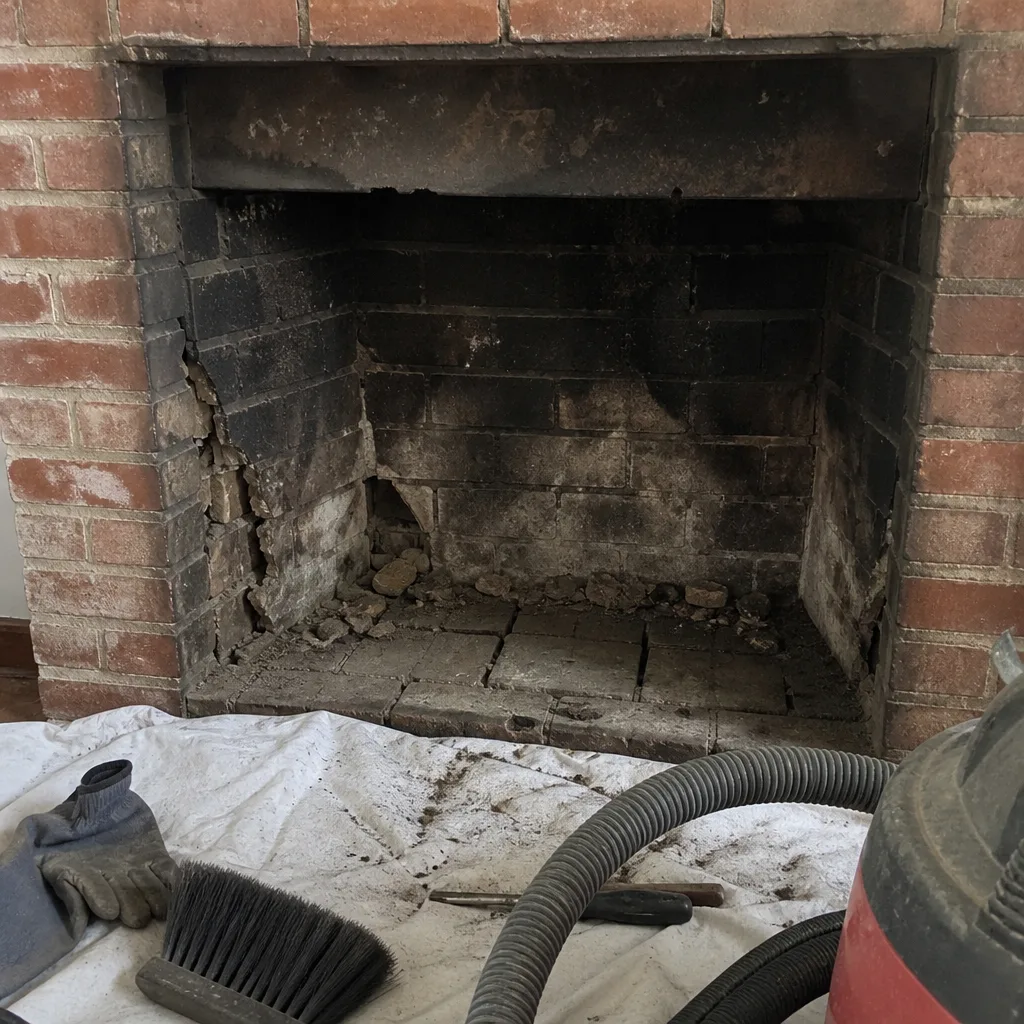
- Firebox wall condition. Look at the brick and mortar inside the firebox. Deteriorating mortar joints, chalky white staining, or loose brick faces are signs the firebox is breaking down and worth a closer inspection before the next fire.
- Creosote visible above the damper. With a flashlight, look up the flue from the firebox opening. Heavy black buildup on the walls above the damper means the flue is overdue for cleaning.
- Persistent odor in the room. A faint smoky or acrid smell that lingers in the room, especially in warm, humid weather, usually means accumulated creosote and a pressure imbalance pulling odor down.
- Cold air drafting down when there’s no fire. Some downdraft on a cold day is normal, but a strong, steady cold flow suggests the flue is pulling air from the wrong direction and possibly blocked at the top.
If any of these checks turn up something you can’t explain, take a photo. A picture of the firebox wall or the damper plate is often more useful to a technician than a verbal description, and it lets them prepare for what they’ll find. Any sign of a real fire hazard inside the firebox, or smoke spilling into the room, means stop using the fireplace until someone qualified has looked at it.
Signs That Mean “Clean Soon” vs. Signs That Mean “Stop and Inspect”
Not every warning sign has the same urgency. Some tell you the flue is overdue for a sweep but is safe to use carefully in the meantime. Others tell you to stop lighting fires until the chimney has been inspected. Sorting one from the other is the most important judgment call in this whole guide.
Clean-soon signs (schedule a sweep)
- A faint creosote smell that gets stronger in warm, damp weather.
- Visible buildup on the flue walls above the damper, without any of the urgent signs below.
- A smoky smell in the room after the fire has died down.
- Slightly sluggish draft on a cold morning, as long as smoke doesn’t actually come into the room.
Stop-and-inspect signs (no fire until checked)
- Smoke rolling back into the room during a burn, even briefly.
- Any visible crack in the flue tiles inside the firebox or at the top of the chimney.
- Efflorescence, spalling, or debris falling into the firebox from the flue above.
- Rust on the damper or firebox hardware, which points to water reaching the interior.
- A strong, unfamiliar smell that isn’t the wood you’re burning.
- A chimney fire, even a small one, or any sign of one in the past.
The reason the second list is a stop, not a caution, is that a cracked flue tile or a compromised liner can let combustion gases escape into the structure of the house rather than going up the chimney. Carbon monoxide is the specific risk here, and it’s odorless and colorless. This is not a scare tactic, it’s the reason chimney professionals treat liner integrity as a hard line. Anything that suggests the flue itself has been breached belongs in the “stop and inspect” category. When repairs are needed, we come prepared to fix what we find, not just report it, using materials like DuraFlex for relining and HeatShield for resurfacing a deteriorating flue without a full rebuild.
Staining, Spalling, and Rust: What Water Damage Actually Looks Like
Water damage is the most common structural issue we encounter in Portland chimneys, and it’s also the most commonly misread. It shows up in three distinct forms, and each points to a different stage and location of the problem. Learning to tell them apart is the single most useful skill a homeowner can develop before calling a professional.
Efflorescence: the white bloom
That white, chalky stain on the exterior of your chimney is efflorescence, and it’s the first visible stage of water damage. It happens when water gets into masonry, dissolves mineral salts inside the brick or mortar, and then migrates back out through the surface, leaving the salts behind as a bloom. The presence of efflorescence means water is inside the wall. What you have to figure out is where it’s getting in, and that’s a job for a proper inspection of the crown, the flashing at the roofline, and the brick joints themselves.
Spalling: the crumbling face
Spalling is the next stage after efflorescence. The brick face flakes, peels, or crumbles away, and mortar joints begin to loosen. The mechanism is freeze-thaw: water inside the brick expands when it freezes and pushes the face off. Once spalling is visible on a Portland chimney, the water has had time to work in and out more than once. Brick faces that are crumbling, or mortar joints that are raked out, mean the masonry is no longer weather-tight and needs repair rather than just a fresh coat of sealer.
Rust: the interior signal
Inside the firebox, rust on the damper, damper frame, or firebox hardware is the interior equivalent of exterior efflorescence. It means water is finding its way into the chimney in a way that reaches the metal components. That’s often a flashing detail, a crown crack, or a masonry joint on the upper stack. A rusted damper isn’t a reason to replace the fireplace; it’s a reason to find out how water is getting in and seal that path. We keep professional-grade materials on hand for the repair end of this, from proper flashing work to the specific mortars and sealants a chimney needs. If the flue itself is compromised, relining with DuraFlex is one option, and HeatShield can resurface and restore deteriorating flue tiles without tearing out the whole chimney.
Moss on the Crown and the Masonry Problem It Hides
A green cap of moss on your chimney looks like a Portland landscaping feature. It’s actually a warning sign, and one of the most reliable ones. Moss only grows in persistently moist conditions, and the most common moist condition on a chimney is a crown that’s no longer shedding water the way it should. The crown is the concrete or masonry cap at the top of the chimney, and its whole job is to push rain away from the top of the stack and out past the sides. When it cracks, water sits on it, and moss moves in.
The problem is what’s underneath. A crown can look solid from the ground while hiding a network of hairline cracks that let water drip down the outside of the flue liner. Over a winter, that water can work into the space between the flue and the chimney walls, and in Portland’s damp climate it doesn’t dry out quickly. What you’ll see from the ground is moss. What a technician will see from the roof is a crown that needs replacing and possibly a liner that’s been taking on water for longer than the moss has been visible.
Moss also hides other problems. Long green growth along a mortar joint often means the joint itself has started to fail and is holding water. Once the moss is cleared away, the technician can look at the actual condition of the crown and the top courses of brick. That’s the point of a proper inspection: not just cleaning off the visible growth, but checking whether the growth was covering a structural issue. If the crown or upper masonry has failed, the repair belongs with the same company doing the sweep. Splitting the work between a cleaning crew and a separate masonry contractor usually means the problem gets handed back and forth while the water keeps coming in.
Our technicians have up to 9 years of experience reading these signs on Portland roofs, and we treat moss as a prompt to inspect, not a cosmetic issue to ignore until spring.
How to Describe a Warning Sign to a Technician
The description you give when you book a sweep changes what the technician brings and how they approach the job. A vague call (“my chimney smells”) and a specific one (“there’s a faint creosote smell in the living room that’s strongest on damp days, and the damper plate is rusted”) are two very different jobs. The second one tells the technician to expect a water issue and to check the flashing and crown as well as the flue. Here’s how to describe what you’re seeing in language that actually helps.
- Name the location precisely. “On the exterior brick, about halfway up the chimney” is more useful than “on the chimney.” Say whether the sign is inside the house or outside, and if inside, whether it’s in the firebox, at the damper, or on the chimney breast wall.
- Describe the color and texture. “White and chalky” means efflorescence. “Flaking and crumbling” means spalling. “Rust-colored” means oxidation. Each points to a different diagnosis and preparation.
- Say when it appears. “Only after a fire” versus “all the time” versus “worse in damp weather” tells the technician whether this is a draft issue, a moisture issue, or both.
- Note any smoke spillage. If smoke has come into the room, say so, and say whether it happened on lighting, mid-burn, or on a windy day. This is the single most important detail for triage.
- Take a photo. A phone photo of the firebox, the damper, or the exterior stain is worth more than a paragraph of description. Include something for scale if you can.
- Mention known history. If the chimney hasn’t been swept in a known number of years, say so. If you’ve had a chimney fire in the past, mention it even if it was small. If a previous inspection flagged something, mention it.
One caution: don’t try to clean soot or stains off before you call, and don’t try to diagnose the flue yourself by looking down from the top. The information a technician needs is the information currently visible, including the soot, and getting on a Portland roof in wet weather without the right equipment is a real fall risk. Describe what you see, take photos, and let the technician handle the roof.
Common Mistakes to Avoid
- Treating efflorescence as cosmetic. A white bloom on exterior masonry is water moving through the brick. Painting over it hides the symptom and traps the moisture inside, which accelerates spalling. Find the water path instead.
- Assuming a slow draft is just a Portland house quirk. Many older Portland homes have genuinely quirky draft behavior, but a fireplace that used to draw well and now doesn’t is telling you something changed. That change is usually creosote accumulation, an obstruction, or a liner issue.
- Putting off the sweep until the smell is obvious. Creosote smell is stage two, not stage one. By the time you can smell it clearly, the flue has usually been accumulating for a while. Schedule the sweep on the calendar, not on the smell.
- Skipping the dryer vent because the chimney is the focus. Dryer vents share the same fire risk profile as a chimney: lint and creosote are both fire fuels, and a clogged dryer vent can ignite just as a creosote-lined flue can. Sweeping the chimney and leaving the dryer vent alone misses half the picture.
- Calling three different contractors for sweep, vent, and repair. Each handoff means repeating the diagnosis, and problems found during one service often relate to another. One company handling the sweep, the dryer vent cleaning, and any repair keeps the whole system in one picture.
- Ignoring moss as “just Portland.” Moss on the crown is a moisture issue, and the crown underneath is often worse than it looks. It’s a sign to inspect, not a sign of local character.
- Burning unseasoned wood to “get through” a slow-draft season. Wet wood creates more creosote and makes the draft worse, which compounds the problem the sweep is meant to fix. Seasoned wood and a clean flue are a pair.
When to Call a Professional
Call a chimney professional when you see any of the stop-and-inspect signs above, when efflorescence or spalling has appeared on the exterior masonry, when the damper or firebox hardware is rusting, or when it’s been long enough since the last sweep that you’re not sure of the date. Call before the start of burning season, when the chimney has had a chance to dry out and before the first fire of the year, so any water damage found in the fall can be repaired before it takes on another Portland winter. Call if smoke has entered the room, if you’ve had a chimney fire, or if the fireplace has started behaving differently than it used to. A chimney is a system with pressure on it from both combustion and weather, and a trained eye catches both. Belmont Chimney Cleaning offers free estimates in Portland. Call (866) 413-9023. We answer 24/7. Fast dispatch from 7am to 7pm, Sunday through Friday.
Frequently Asked Questions
Most Portland chimneys should be swept at least once a year, and more often if you burn heavily or notice any of the warning signs in this guide. The annual sweep is the baseline, not the ceiling. Portland’s damp climate means the exterior inspection matters as much as the flue cleaning, so an annual visit gives you both. If you’ve had the chimney swept within the year but a new warning sign has appeared, don’t wait for the calendar. Call (866) 413-9023 for an exact quote; estimates are free.
A white stain on exterior chimney masonry is usually efflorescence, which means water is moving through the brick or mortar and pushing mineral salts to the surface. It’s the first visible stage of water damage, and it points to a water-entry path at the flashing, crown, or brick joints. Portland’s wet winters make it appear earlier here than in drier climates. Get it inspected before the next rainy season. Call (866) 413-9023 for an exact quote; estimates are free.
Sometimes. A fireplace that has always drawn a little lazily may just be a roofline or pressure quirk. But a fireplace that used to draw well and no longer does is usually telling you something changed, and the change is often creosote buildup, an obstruction at the top, or a liner issue. If smoke actually comes into the room, stop using the fireplace and get it inspected. Call (866) 413-9023 for an exact quote; estimates are free.
Treat moss on the chimney crown as a sign to have the crown inspected. Moss only grows where moisture persists, and a crown with hairline cracks is the most common cause on a Portland roof. The moss itself is cosmetic; the crown condition underneath it is what matters, and it’s often worse than the moss suggests. A proper inspection will tell you whether the crown needs repair before it becomes a bigger problem. Call (866) 413-9023 for an exact quote; estimates are free.
You can handle basic firebox cleaning from inside the house, but the flue itself and the roof-level components are a professional job. Getting on a Portland roof, especially in wet weather, is a genuine fall risk, and a sweep from below without the right equipment doesn’t reach the upper flue or let you see the crown, flashing, and liner condition. The value of a professional sweep is the inspection that comes with it. Call (866) 413-9023 for an exact quote; estimates are free.
Yes, and it’s better if one company does. Belmont Chimney Cleaning handles chimney sweeping, dryer vent cleaning, and chimney repair as three service lines under one roof, so problems found in one area can be addressed by the same team. Dryer vents and chimneys share the same fire risk profile, since lint and creosote are both fire fuels, and splitting the work across contractors usually means repeating the diagnosis. Call (866) 413-9023 for an exact quote; estimates are free.
What actually happens if I skip the sweep for another year?
Creosote accumulates on the flue walls with every fire, and it’s combustible. A flue with heavy buildup is easier to ignite, and a chimney fire can damage the liner or masonry in ways that aren’t visible from the outside. On top of the fire risk, water damage that starts as efflorescence can progress to spalling and eventually structural repair, which is a much larger job than a sweep. Skipping a year isn’t an automatic disaster, but it does raise the risk on both fronts. Call (866) 413-9023 for an exact quote; estimates are free.
The Bottom Line
The warning signs in this guide are visible for a long time before they become dangerous, but they only help if you read them correctly. In Portland, weight the water signs: efflorescence, spalling, moss, and damper rust all point to moisture finding a way into the masonry, and Portland’s wet climate makes those paths open earlier and stay open longer than the national guides suggest. The smoke and draft signs point to cleaning and flue condition, and those are usually handled by a straightforward sweep. If you’re unsure which category your sign falls into, it goes in the stop-and-inspect column. One call covers the sweep, the dryer vent cleaning, and any repair found along the way, and the technician arrives prepared to fix what they find. For a chimney sweep in Portland, trust the Belmont Chimney Cleaning team and call (866) 413-9023 to book a free estimate. We answer 24/7. Fast dispatch from 7am to 7pm, Sunday through Friday.
Written by the team at Belmont Chimney Cleaning.
See the difference
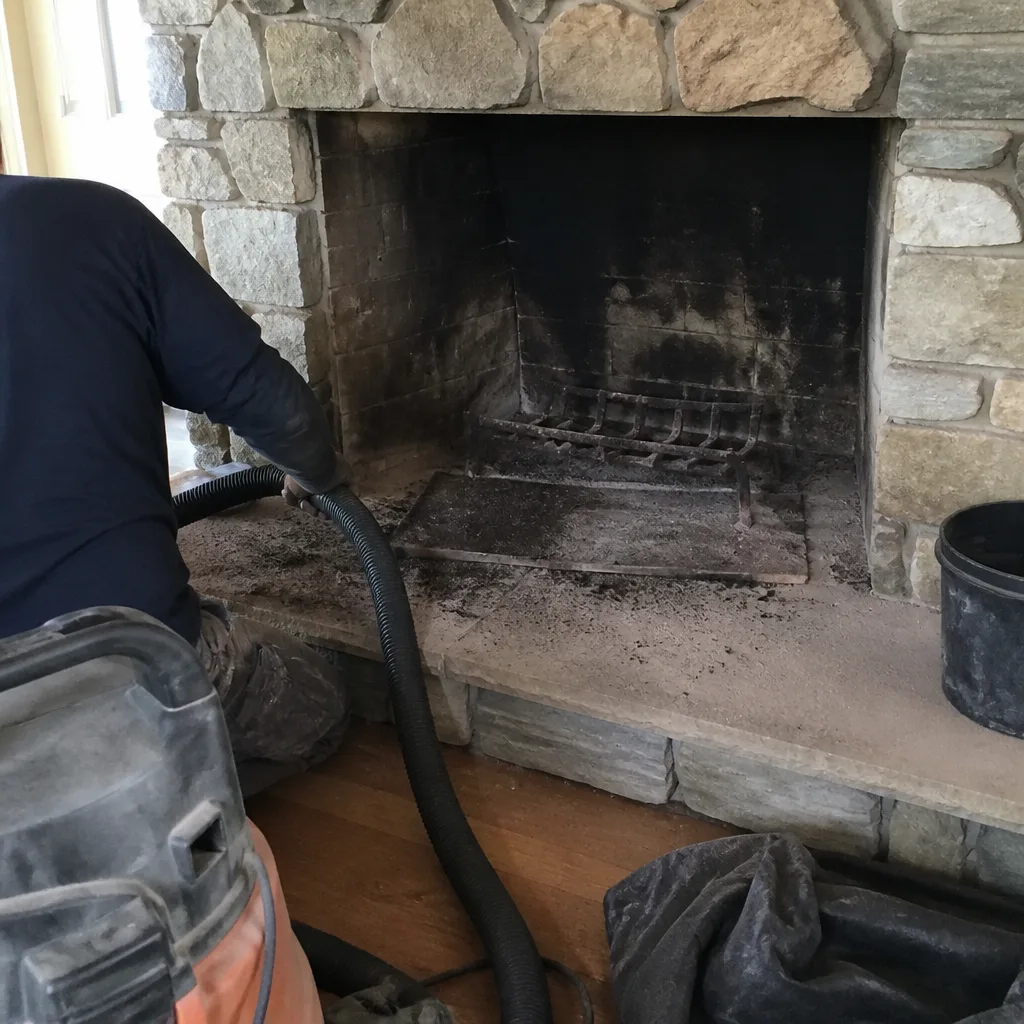 Before
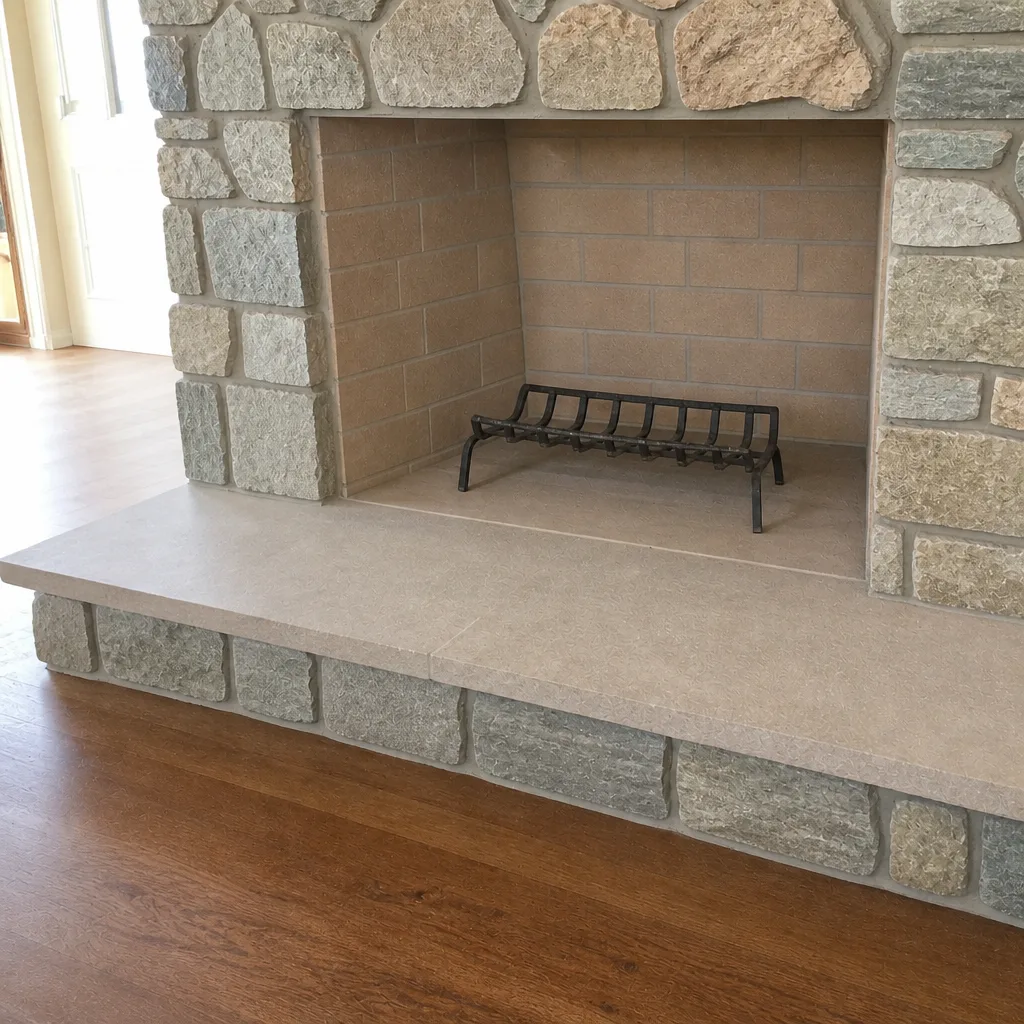 After
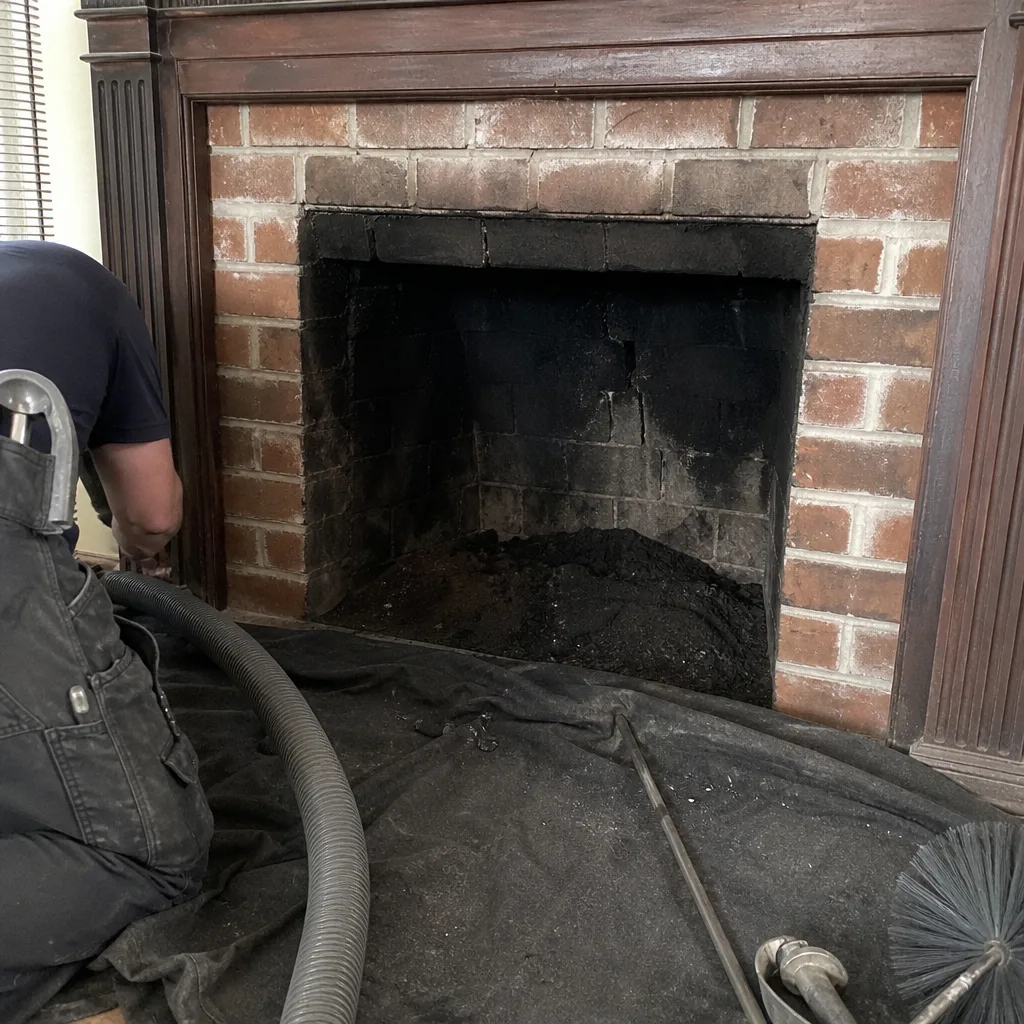 Before
 After
 Before
 After