
Famco Chimney Sweep in Portland: A Homeowner’s Guide
If a contractor quoted you a Famco cap or vent cover and you went straight to Google to check whether the brand was worth the line item, you’re asking exactly the right question. Material spec matters more than most chimney companies care to explain, because the parts on top of your chimney and the end of your dryer vent are what keep water, animals, and embers where they belong. Famco is one of the most widely specified venting component brands in Portland chimney and dryer vent work, and this guide explains what you’re actually buying when it shows up on an estimate. If you’d rather skip the research and just get it handled, call (866) 413-9023.
Key Takeaways
- Famco makes venting components: caps, registers, dampers, and vent covers, not full chimney systems.
- Brand specification matters because gauge, fit tolerance, and finish determine how long a cap survives Portland’s wet winters.
- You can verify what was installed by asking for the spec sheet and checking the invoice against the model number on the box.
- Vent caps aren’t glamorous, but the right one keeps rain and wildlife out and keeps lint and embers moving the way they should.
What does Famco actually make, and which products show up in Portland homes?
Famco manufactures venting components for residential chimney and dryer vent systems. In Portland work, the pieces you’re most likely to see are chimney caps, vent caps, registers, and dampers. These are the parts that sit at the termination point of a flue or vent and do the unglamorous work of keeping weather out while letting exhaust escape.
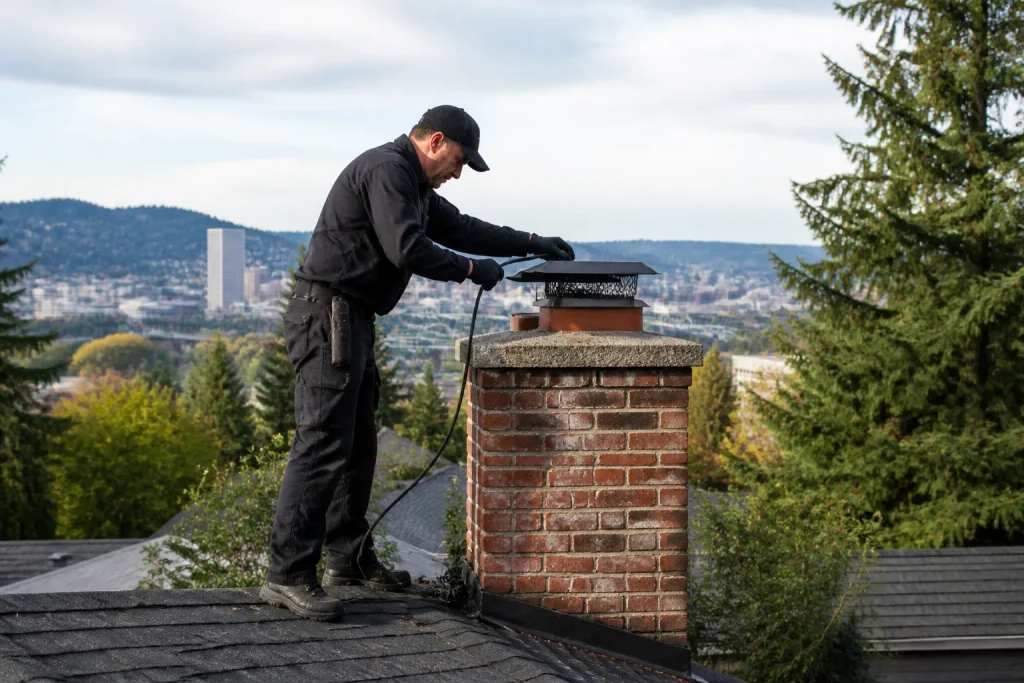
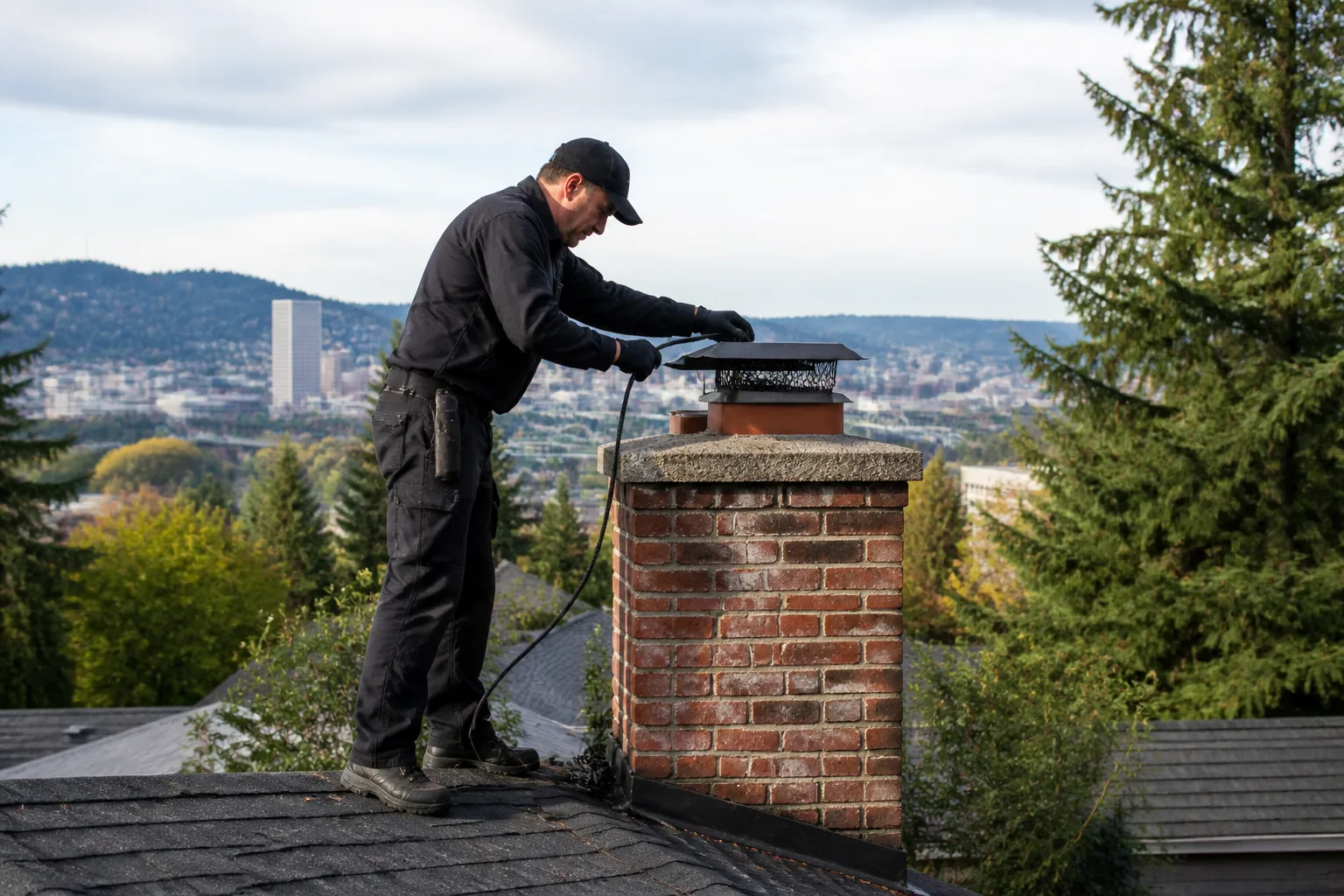
A chimney cap is the most common Famco product we specify. It’s a lid with screened sides that sits over the flue opening and stops rain from running straight down the tile, keeps birds and squirrels from nesting, and catches sparks before they hit the roof. A vent cap does the same job at the end of a dryer vent or bath fan run, and a register or damper controls airflow at the interior termination.
The reason these components show up so often in Portland residential work comes down to what the local climate asks of them. We get a lot of rain and a lot of moss, and a cap with thin metal and a loose fit will let water track down the flue or corrode at the seams within a few seasons. A properly gauged, correctly fitted cap doesn’t. That’s the whole case for specifying a professional-trade brand over a hardware-store generic, and it’s why you’ll see Famco alongside Copperfield and DuraFlex in serious Portland chimney work.
What Famco doesn’t make matters too. It isn’t a full chimney liner system, and a Famco cap isn’t the same thing as having the flue relined. If a contractor tells you they’re going to “Famco the chimney,” they should be able to tell you exactly which component they mean.
Why do professionals specify Famco instead of a big-box alternative?
Professionals specify Famco because the spec is about gauge, fit tolerance, and longevity, and the cheaper alternatives cut corners on all three. A big-box cap and a professional-grade cap look similar from the ground. Up close, they usually don’t.
Gauge is thickness of the metal. A heavier gauge cap holds its shape through thermal cycling: hot flue gases at the bottom, cold rain at the top, expansion and contraction every season. A thinner cap oil-cans, meaning the flat panels flex and eventually crack at the seams. In a wet climate like Portland’s, a seam that opens is a seam that rusts from the inside out.
Fit tolerance is how closely the cap matches the flue’s actual dimensions. A cap that’s too loose rattles and lets water in at the gap. A cap that’s too tight can pinch and distort. Professional-grade components are made to standard dimensions that match common flue sizes, so a specified cap actually seals.
Longevity is the payoff. A proper cap sized and installed correctly should last through many Portland rainy seasons. A cheap cap may need replacing well before that, and each replacement means someone up on the roof again.
We use the same professional-grade materials chimney engineers specify, not big-box alternatives, because the whole point of the part is that you don’t think about it again. When a cap is on the quote, it should be a component worth installing, not whatever the local store had in stock that week.
How do you verify a Portland chimney company actually installed what they quoted?
You verify what was installed by asking three things: the manufacturer and model number on the quote, the box or spec sheet when the job is done, and the invoice line item that matches the two. A company that specifies the brand they’re installing can show you this without hesitation.
Here’s what to ask:
- On the written estimate: Is the component listed by manufacturer and model number? “New chimney cap” is not a spec. “New Famco cap, model [X], sized to [Y]” is.
- Before the work begins: Can you show me the spec sheet? A professional can pull it up or bring it with the part.
- At completion: Does the invoice match the estimate line for line on brand and model? If the invoice just says “cap, vent,” ask why.
- After installation: Does the installed cap match the size of the flue, sit level, and have a screen with no gaps?
If a contractor specifies Famco on the quote and then installs a different brand, that’s a substitution, and it’s worth understanding why. Sometimes it’s honest. Sometimes it isn’t.
On the chimney side, a sweep should also document what’s inside the flue with photos or video, not just report it verbally. That’s the same principle: you should be able to verify what was found and what was specified.
How do Famco dryer vent products reduce lint trap and fire risk?
Famco dryer vent products reduce fire risk by keeping the vent termination closed against weather and animals while staying open enough for lint and humid exhaust to move. The cap is a small part, but the wrong one changes how the whole vent run behaves.
Lint is the fuel in a dryer fire, and it accumulates wherever airflow slows. A vent cap with the wrong screen or a damper that doesn’t open fully creates back pressure, and back pressure is exactly what pushes lint to settle in the duct instead of blowing clear. A cap with too coarse a screen lets birds in. A cap with too fine a screen clogs with lint. The right cap threads that needle, and this is where specified products earn their place: the dimensions and screen openings are made to standard, so the vent run performs the way it was designed.
Dryer vents and chimneys share the same risk profile. Lint and creosote are both fire fuels, and both build up quietly in a duct or flue nobody checks. The cap on the outside is the first thing to inspect and the last thing most homeowners think about.
If your dryer is taking longer to dry a load, if the outside flap doesn’t open when the dryer runs, or if you haven’t had the vent looked at in years, that’s the point to have it checked. Dryer vent cleaning is part of a full vent service, and the cap gets inspected at the same time.
When does a brand substitution actually matter, and when doesn’t it?
A brand substitution matters when the specified component is doing a real job and the replacement does it worse. It doesn’t matter much when the two parts are genuinely equivalent and the contractor can tell you why they swapped.
Common honest substitutions happen when a specified model is out of stock and the contractor offers an equivalent from a line they’re confident in. That’s fine if they say so up front and list the alternate on the invoice. What you don’t want is a silent swap: a specified Famco cap replaced with a generic model and no mention of it, with the invoice still showing the spec.
Ask two questions of any substitution:
- Is the replacement at least as heavy a gauge, and sized correctly to my flue or vent?
- Is the finish appropriate for a wet climate, or will it start to fail in a few winters?
If a contractor can answer both with specifics, the swap is probably fine. If they shrug and say “it’s basically the same,” that’s your answer.
We come prepared to fix what we find, not just report it, and part of that is having the right components ready. A swept flue with a failing cap isn’t finished, and a replaced cap with the wrong fit isn’t either.
When should you call a pro instead of checking the cap yourself?
Call a pro when the check means going up on a roof, standing at a steep angle, or leaning over a flue opening. Cap inspection sounds simple from the ground. It isn’t, and the injuries that come from falling off a wet Portland roof or leaning too far over a stack are entirely avoidable.
The stakes on the flue side matter too. Creosote is a real fire fuel, and a flue that hasn’t been inspected in a while can hide buildup or a cracked tile that no cap on top will fix. A trained sweep uses lighting, photos, and tools that tell you what’s actually going on inside, and part of the job is telling you honestly when something can wait.
If you’re in Portland and notice a cap that’s missing, damaged, rattling, or full of nests, or if your dryer vent flap stops moving, that’s the moment to book a look. Nothing on the checklist is complicated. Getting to the checklist safely is where the pro comes in.
Related services in Portland: a chimney sweep covers the flue and the cap on top, and dryer vent cleaning covers the other vent run. Our technicians have up to 9 years of experience, and we can do a sweep, a vent cleaning, and any repair we find under one company.
One harmless note: a Famco cap is not a decorative piece, and no matter how well it’s specified, it will never be the cutest thing on your roofline. It’s a lid. A very good lid.
The Bottom Line
Famco is a professional-grade component brand, and the reason it shows up on Portland chimney and dryer vent quotes is gauge, fit tolerance, and longevity in a wet climate. When you see it specified, ask for the model number, check the invoice when the work is done, and question any silent substitution. Then have the sweep done by someone who inspects the flue with tools and photos, not just a flashlight and a guess. If you’re in Portland and need help, Belmont Chimney Cleaning offers free estimates. Call (866) 413-9023. We answer 24/7. Fast dispatch from 7am to 7pm, Sunday through Friday.
Frequently Asked Questions
Yes. Famco is a professional-grade venting component brand, and its caps and vent covers are specified in Portland work because they’re made to standard dimensions and gauge. A properly sized Famco cap survives a wet Portland climate far better than a thin generic alternative. To have yours inspected or quoted, call (866) 413-9023 for a free estimate.
Gauge, fit, and finish. The hardware-store cap is usually thinner metal and made to a looser tolerance, so it flexes, corrodes at the seams, and may not seal the flue opening. A professional-grade cap holds its shape through thermal cycling and fits the standard flue dimensions. We can show you the spec side by side; call (866) 413-9023 to book a free estimate.
Yes, if the replacement cap is a thinner gauge, the wrong size, or a finish that won’t hold up in Portland weather. Ask the contractor for the reason, the spec of the substitute, and an updated line on the invoice. If the answer is “basically the same,” push for specifics. Call (866) 413-9023 if you’d like a second look.
It helps. A correctly sized vent cap keeps rain and animals out while letting lint and humid exhaust move, which is what keeps lint from settling in the duct. Lint buildup in a restricted vent is the leading cause of dryer fires, so a cap that’s properly specced and matched to the vent matters. To have your dryer vent and cap checked, call (866) 413-9023 for a free estimate.
Written by the team at Belmont Chimney Cleaning.
Need Chimney Cleaning Help?
Call Belmont Chimney Cleaning - licensed & insured, here with fast help in Portland.
(866) 413-9023